192.168.2.1 Login Admin
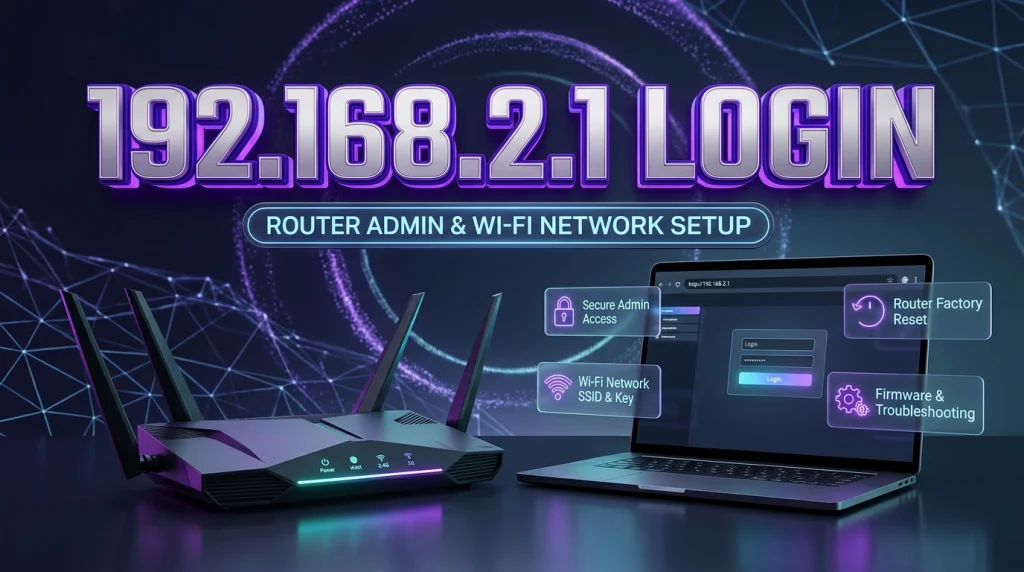
To log in to 192.168.2.1, connect your phone or computer to your router’s Wi-Fi network or use an Ethernet cable. Open a web browser and enter http://192.168.2.1 in the address bar. If this is your router’s current gateway address, the admin login page should appear.
Enter the administrator username and password for your specific router to access its settings. If the page does not open or your password is rejected, use the troubleshooting steps below to identify and fix the problem.
192.168.2.1 IP Address
To access the admin page type 192.168.2.1 into your web browser’s address bar or click on the link below.
Can’t Login? Try These Fixes
- Make sure your device is connected to the router’s Wi-Fi or directly with a LAN cable.
- Type the IP in the address bar, not in the search box. Use http:// instead of https://.
- Check the correct IP: on Windows run ipconfig and look at Default Gateway; on phone check Wi-Fi details.
- Turn off VPN or proxy, then try another browser or an incognito window.
- Restart the router and try again after 2 minutes.
- Last option: reset the router with the reset button (hold ~10 seconds). This erases all your settings.
Based on your local ip address, this should be your router admin ip address. This is only the case if you are in the same network as your wifi router.
How to Log In to 192.168.2.1
Follow these steps to access your router’s admin panel:
- Connect to your router: Join the router’s Wi-Fi network or connect your computer using an Ethernet cable.
- Open a web browser: Use Chrome, Firefox, Safari, or Microsoft Edge.
- Enter the router IP: Type
http://192.168.2.1directly into the browser’s address bar. - Open the login page: Press Enter and wait for the router’s login screen to appear.
- Enter your login details: Use the administrator credentials set for your router model.
- Access the settings: After logging in, open the relevant menu to manage Wi-Fi, security, or network settings.
If the login page does not appear, do not assume your router is faulty. It may use a different IP address.
192.168.2.1 Default Username and Password
The default username and password for 192.168.2.1 depend on your router’s manufacturer, model, and configuration. Some routers use a default username and password, while others require you to create an administrator password during setup.
| Login detail | Where to find it |
|---|---|
| Router IP address | Router label, user manual, or device’s default gateway |
| Username | Router label or official setup guide, if required |
| Admin password | Device label, setup card, or password created during setup |
| Wi-Fi password | Router label or wireless settings; it may differ from the admin password |
Some older or factory-configured routers may use credentials such as admin as a username. However, do not assume that admin/admin or any other common combination will work on your router.
If the password has been changed, the original default credentials may no longer work. Check your router’s documentation or contact your internet service provider if it supplied the device.
What Is 192.168.2.1?
192.168.2.1 is a private IPv4 address that some routers use as their local management address or default gateway. It allows a connected device to communicate with the router and, where supported, open its administration page.
This address is not a public website. You generally need to be connected to the router’s local network to access its settings.
Not every router uses 192.168.2.1. Depending on the model and configuration, the gateway may instead be 192.168.1.1, 192.168.0.1, or another private address.
How to Find Your Router’s IP Address
If 192.168.2.1 does not open your router’s login page, check the default gateway on a device connected to the network.
On Windows
- Connect your computer to the router.
- Open Command Prompt.
- Type
ipconfigand press Enter. - Find the active Wi-Fi or Ethernet adapter.
- Locate the Default Gateway value.
- Enter that address into your browser.
On macOS
- Open System Settings.
- Select Network and choose your connected Wi-Fi or Ethernet connection.
- Open the connection details.
- Find the Router address.
- Enter that address in your browser.
On a Phone
Open the details of your connected Wi-Fi network and look for Router, Gateway, or a similar field. The exact label depends on your phone and operating system.
Use the address shown by your device rather than guessing which IP your router uses.
192.168.2.1 Not Working? Try These Fixes
If you cannot open the login page, follow these troubleshooting steps in order.
1. Check the IP Address for Typing Errors
- Make sure you enter
192.168.2.1correctly. Type it directly into the browser’s address bar rather than a search engine. - Do not confuse the number
1with the letterl, and avoid relying on browser autocomplete if it inserts an incorrect address.
2. Connect to the Correct Network
- Your phone or computer must be connected to the router you want to manage. If you are using mobile data, a guest network, or another router’s Wi-Fi, the admin page may not be accessible.
- Reconnect to your router’s main network and try again.
3. Verify the Default Gateway
- Your router may use a different local IP address. Check the default gateway using the instructions above and enter the correct address in your browser.
- This is particularly important if an internet provider or previous administrator changed the router’s settings.
4. Check the Router and Cables
- If you are using Ethernet, make sure the cable is securely connected to the correct router port and your computer. If you use Wi-Fi, check that your device remains connected to the router.
- Check the router’s status lights and consult its manual if the device appears offline or shows an error indicator.
5. Try Another Browser or Restart the Router
- Try opening the address in another browser or on another connected device. If you use a VPN or proxy, temporarily disconnect it and test again.
- If the correct gateway remains inaccessible, restart the router according to the manufacturer’s instructions. Wait for it to finish starting up, reconnect to the network, and try again.
- A restart does not necessarily change the router’s configured IP address or restore its factory settings.
6. Recover Your Admin Password
- If the login page opens but rejects your credentials, confirm that you are entering the router administrator password rather than the Wi-Fi password. These passwords may be different.
- Check the official manual or manufacturer’s support page for your exact model. If the router was supplied by your internet provider, ask the provider for assistance.
- Use a factory reset only as a last resort. A reset can erase custom settings, including your Wi-Fi name, passwords, and internet connection configuration. Follow the procedure for your exact model and make sure you can restore the necessary settings before proceeding.
How to Change Your Wi-Fi Name and Password
After logging in, you can usually manage your wireless network from the router’s settings page. Menu names vary by manufacturer, but the general process is similar.
- Open the Wi-Fi, Wireless, or WLAN menu.
- Find the network name, also known as the SSID.
- Enter your preferred Wi-Fi name.
- Locate the wireless password or security settings.
- Set a strong, unique Wi-Fi password and choose WPA3 or WPA2-AES security if supported.
- Save the changes and reconnect your devices using the updated details.
Changing the Wi-Fi password may disconnect your phones, laptops, smart TVs, and other wireless devices until they reconnect.
For better security, also replace a weak or shared administrator password with a strong, unique one. The router admin password controls access to settings, while the Wi-Fi password controls access to your wireless network.
Can You Change the 192.168.2.1 Router IP Address?
Some routers let you change their local IP address from the LAN or network settings. The option depends on the model and may be restricted on devices managed by an internet provider.
Before changing the address, record your existing network configuration and follow the manufacturer’s instructions. After saving the change, you may need to use the new IP address to access the admin panel.
If your router is managed by your internet provider, check with the provider before modifying its network settings.
Frequently Asked Questions
What is 192.168.2.1 used for?
192.168.2.1 is a private IP address that some routers use as a default gateway or local administration address. You can use it to open the router’s login page when your device is connected to the appropriate network and the router uses that address.
What is the default password for 192.168.2.1?
There is no universal default password for this IP address. The credentials depend on the router’s manufacturer, model, and configuration. Check the router label, official manual, or setup information.
Why is 192.168.2.1 not opening?
Your router may use a different gateway, or your device may be connected to another network. Check the address for typing errors, reconnect to your router, and verify the active default gateway.
Can I change my Wi-Fi password through 192.168.2.1?
Yes, if your router uses this address and provides wireless settings through its admin panel. Log in, open the Wi-Fi or Wireless menu, change the password, and save your settings.
What should I do if I forget my router admin password?
Check the manufacturer’s recovery instructions or contact your internet provider if it manages the router. A factory reset may restore factory settings on some models, but it can erase your existing configuration. Use it only after considering the consequences.
Conclusion
The 192.168.2.1 login process is simple when your router uses this gateway address and you have the correct administrator credentials. Connect to your router, enter the address in your browser, and sign in to manage the available settings.
If the login page does not open, check your connection and confirm the default gateway before trying other fixes. Use the instructions for your exact router model to recover a forgotten password, and avoid a factory reset unless it is necessary.

Hi, I'm James. I've spent 10 to 11 years working hands-on with home networking setups and router configurations, helping everyday users troubleshoot and get online quickly. I created 19216811-login.com to share clear, tested guides for logging into and configuring your router, based on that real-world experience. My goal is to make router setup simple for everyone, one guide at a time.