To use 192.168.0.1 login, connect your phone or computer to your router and enter http://192.168.0.1 in the browser address bar. If this is your router’s current gateway, the admin page should open and ask for login details. This address does not work for every router, and there is no universal username or password for all devices.
Use this guide for a router you own or are authorised to manage. If the page does not open, check your connection and gateway address before trying a reset.
192.168.0.1 IP Address
To access the admin page type 192.168.0.1 into your web browser’s address bar or click on the link below.
Can’t Login? Try These Fixes
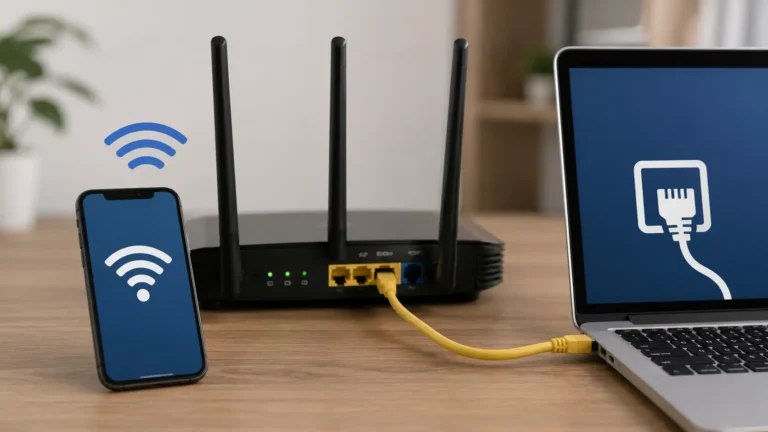
Connect your device to the router’s Wi-Fi or plug in with an Ethernet cable before opening 192.168.0.1. Mobile data will not work.
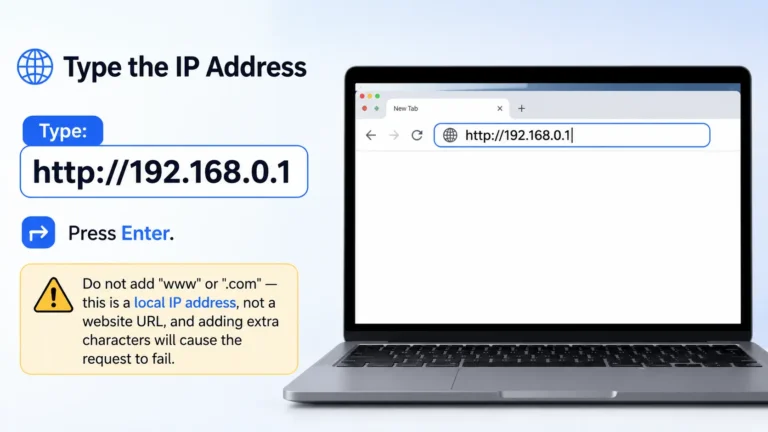
Type the address in the browser’s address bar, not in the search box, and don’t add “www” or “.com”.
If the page doesn’t load, your router may use a different IP. Try 192.168.1.1 or 192.168.100.1.
Turn off any VPN or proxy, clear your browser cache or use a private window, then restart the router and try again.
Forgot the password? Check the sticker on the router, or hold the reset button for 10–30 seconds to restore factory settings.
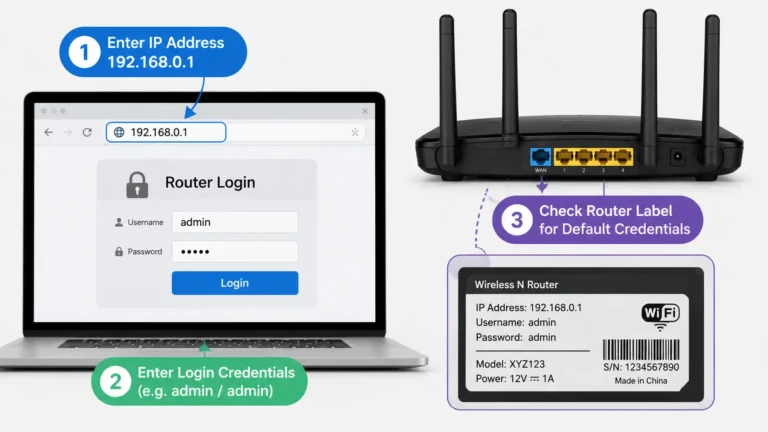
This IP works only when your device is on the same network as your Wi-Fi router. Your router may use a different default address, so check the label on the back or bottom of the device.
Quick Answer Box
To log into 192.168.0.1:
- Connect your device to the router’s Wi-Fi or plug in via Ethernet.
- Open a web browser and type
http://192.168.0.1into the address bar (not a search engine). - Press Enter — you should see a login screen.
- Enter the default username and password (commonly
admin/adminoradmin/password— check your router’s label). - Click Login to open the admin dashboard.
If the page doesn’t load, your router’s actual gateway may be a different address, such as 192.168.1.1 or 10.0.0.1. Jump to the troubleshooting section below.
192.168.0.1 Login Details
| Item | What to use |
|---|---|
| Login address | http://192.168.0.1, only if it is your router’s active gateway |
| Username | The username shown on the device label, manual, or setup instructions; some models do not ask for one |
| Admin password | The current password set during setup or listed in the model-specific documentation or device label |
| Connection | Your router’s Wi-Fi network or a computer connected to a LAN port |
Do not assume admin/admin or a blank password will work. Login details vary by model, firmware, internet provider, and previous setup. The administrator password is also different from the Wi-Fi password on many devices.
How to Log In to 192.168.0.1
Step 1: Connect to the Network
Connect your device to the router’s Wi-Fi, or connect a computer to a LAN port with an Ethernet cable.
Step 2: Open Your Browser
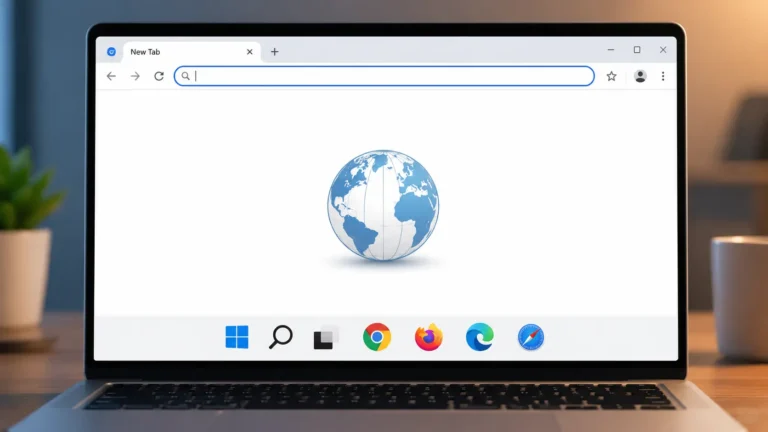
Open Chrome, Firefox, Safari, Edge, or another browser.
Step 3: Type the IP Address
Type
http://192.168.0.1
directly into the address bar, then press Enter. Do not enter it into a search engine box.
Step 4: Enter Login Credentials
When the login page appears, enter the credentials for your exact router model.
Step 5: Access the Dashboard
After signing in, open the relevant menu, such as Wi-Fi, Wireless, Network, Security, or Administration.
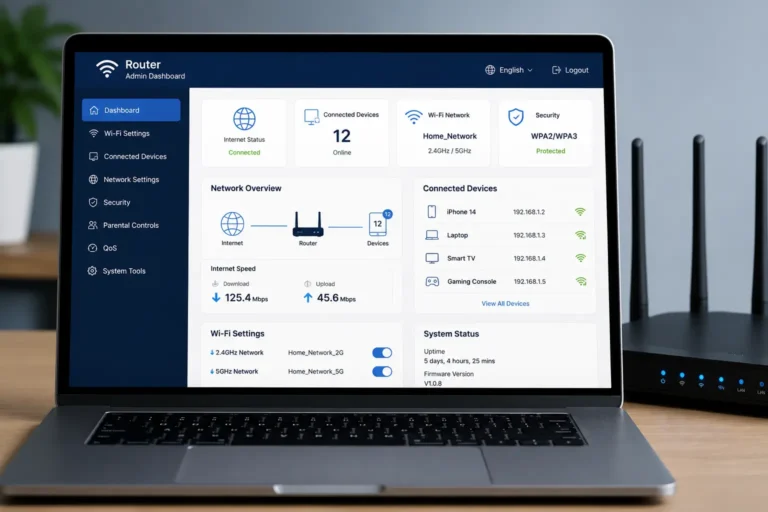
Save changes before leaving. If you change the Wi-Fi name or password, reconnect your devices using the new details.
Default Router Username and Password List
Search your router brand or model below to see its default username, password, and login protocol.
| Brand | Model | Protocol | Username | Password |
|---|
Tip: If these defaults don’t work, check the sticker on the back or bottom of your router — the exact login details are usually printed there. For security, change the default password after logging in.
What Is 192.168.0.1?
192.168.0.1 is a private IPv4 address that can be used as a router’s local gateway and administration address. It is not a public website and is not assigned to one particular brand. Different networks can use the same private address independently. A router owner or internet provider may also change the local address.
Some TP-Link, NETGEAR, D-Link, and other router models may use this address, but not every model from those brands does. Check the label or official manual for your exact model.
How to Find Your Router Username and Password
- Check the label on the bottom, back, or side of the router. It may list an admin password or setup details.
- Read the official quick-start guide or manual for your exact model and hardware revision.
- If your internet provider supplied the router, check its setup card or contact the provider.
- If you changed the admin password before, use the current password rather than the factory default.
- If another person or organisation manages the router, ask the authorised administrator before changing settings.
- For a model-by-model credential reference, use the site’s dedicated default router username and password guide when that page is published. Verify credentials against official manufacturer information; do not present one password as universal.
192.168.0.1 Not Working? Try These Fixes
1. Check your network connection
Connect to the router you want to manage. If your phone is using mobile data or your computer is connected to another Wi-Fi network, the local admin page may not be reachable.
2. Enter the address correctly
Type http://192.168.0.1 in the browser address bar and check every number and dot. 192.168.0.1 and 192.168.1.1 are different addresses.
3. Find the active gateway address
Your router may use another local IP address. On Windows, open Command Prompt, run ipconfig, and look for Default Gateway under the active adapter. On macOS or mobile devices, open the connected network’s details and look for Router or Gateway. Enter that address in your browser.
4. Check VPN, proxy, or browser issues
A VPN or proxy can sometimes interfere with access to a local router. Temporarily disconnect it and retry while connected to your own router. If needed, try another browser or device on the same network.
5. Restart the router if needed
If the address and connection are correct, restart the router using the manufacturer’s normal power procedure. Wait until it has fully booted before testing again. Never interrupt power during a firmware update.
6. Factory reset only as a last resort
A factory reset can erase the Wi-Fi name and password, administrator password, ISP configuration, and other custom settings. Before resetting, read the exact model’s official instructions and make sure you can configure the internet connection again. If your ISP manages the router, contact the provider first.
What Can You Change After Router Login?
The options depend on the router model, but the admin page may let you:
- Change the Wi-Fi network name (SSID) and Wi-Fi password.
- Choose a supported wireless security mode, preferably WPA3 or WPA2-AES where available.
- Review connected devices, checking familiar devices before treating an unfamiliar name as a threat.
- Update firmware through the manufacturer’s official process.
- Change the administrator password to a strong, unique password.
Keep the admin password separate from your Wi-Fi password. Do not enable remote administration unless you understand the risks and need the feature.
192.168.0.1 vs 192.168.1.1
These are different private IP addresses. A router using 192.168.0.1 will not necessarily open at 192.168.1.1. Check the gateway shown by your connected device instead of guessing. For instructions focused on the other address, see the site’s main 192.168.1.1 login guide.
Frequently Asked Questions
What is the default password for 192.168.0.1?
There is no universal password for this IP address. Check the router label, official manual, or setup information. Newer models may require a password created during setup.
Why does 192.168.0.1 show an error?
Your device may be on the wrong network, the router may use another gateway address, or a VPN or browser setting may interfere. Check the connection and active gateway.
Is 192.168.0.1 the same as 192.168.1.1?
No. They are different private IPv4 addresses. Use the gateway address shown in the network settings of the device connected to your router.
Can I change my Wi-Fi password after login?
Usually, yes. Open the router’s Wi-Fi or Wireless settings, enter a new password, and save the change. You may need to reconnect your devices.
What if I forgot the admin password?
Check the recovery instructions for your exact model and ask the person who configured the router if appropriate. Use a factory reset only if necessary because it can erase custom settings.
Conclusion
192.168.0.1 login works only when that address is the gateway for your connected router. Connect to your own network, use credentials confirmed by the label or official model guide, and check the active gateway if the page will not load. After access, secure the administrator account and review Wi-Fi settings. Avoid a factory reset unless you are ready to configure the router again.

Hi, I'm James. I've spent 10 to 11 years working hands-on with home networking setups and router configurations, helping everyday users troubleshoot and get online quickly. I created 19216811-login.com to share clear, tested guides for logging into and configuring your router, based on that real-world experience. My goal is to make router setup simple for everyone, one guide at a time.